


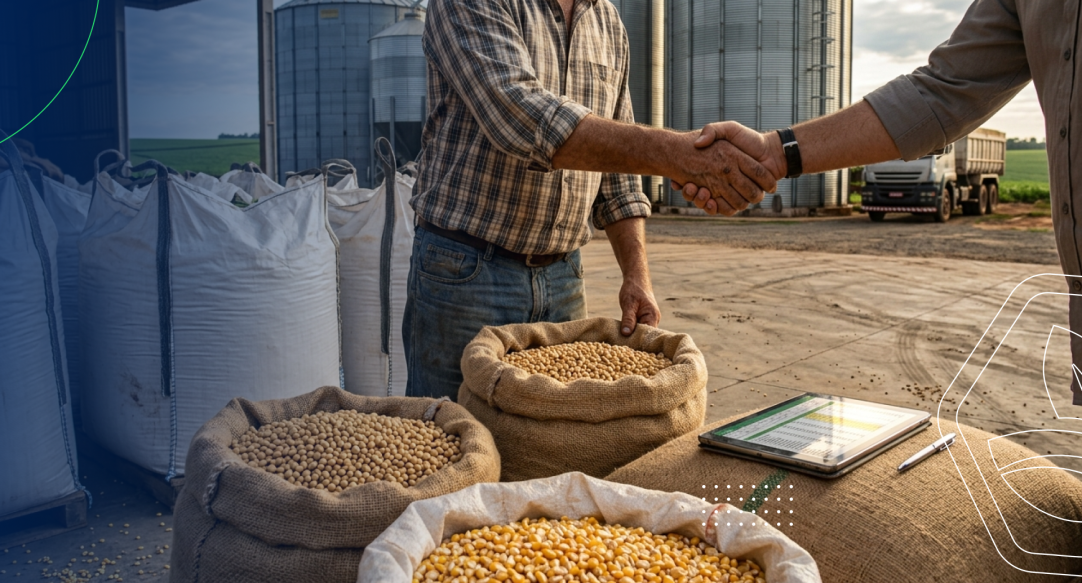
Brazilian agribusiness is expected to reach a new level in barter operations in 2026, reflecting structural changes in access to inputs and the financing of agricultural production. In a scenario of tighter margins and more selective credit conditions, the exchange of inputs for future production is gaining strategic relevance for producers and companies across the value chain.
Recent data indicates that barter transactions could account for around 30% of input negotiations in the country, consolidating their role as one of the main mechanisms for enabling crop production. This trend is occurring alongside a more cautious agricultural credit environment, which has become increasingly restrictive in recent years.
Margin volatility and changes in crop financing
The reduction in margins for grain production and increased selectivity in credit allocation have structurally altered access to inputs in agribusiness. This scenario has intensified over the past three years, requiring adjustments in how producers structure crop financing.
Historically, a significant portion of fertilisers, seeds, and crop protection products has been financed through rural credit lines or producers’ own capital. In this context, direct exchange models between future production and inputs have become an important tool for maintaining investment flows in the field.
Barter gains prominence in the agricultural chain
Projections for 2026 indicate that barter will continue to expand its share in input transactions. In an environment of higher risk and lower financial predictability, this model is taking on a strategic role in sustaining agricultural activity.
In addition to facilitating access to inputs, barter allows producers to align part of their costs directly with future production, reducing exposure to price volatility and the need for immediate capital.
Despite its advantages, experts highlight that barter requires careful market analysis. Defining volumes, timelines, and exchange conditions must take into account factors such as price expectations, productivity, and production costs.
A thorough assessment of both agricultural and financial scenarios is essential to ensure that barter operations effectively contribute to the economic sustainability of the crop.
Read also: The risk to soybean margins lies in commercialisation in 2026
Structural adjustments in input chain relationships
The growth of barter operations also reflects broader changes in the relationships between producers, distributors, and companies within the agricultural input chain.
With tighter margins and greater market volatility, integration between commercial, financial, and risk management structures is becoming increasingly necessary.
Conclusion: barter as a strategic tool in agribusiness
The expansion of barter operations highlights the adaptation of Brazilian agribusiness to a more challenging economic environment. With more selective credit and tighter margins, producers and companies across the chain must find mechanisms to ensure operational continuity and access to inputs.
In this context, barter is consolidating itself as a strategic tool to enable production, strengthen commercial relationships, and sustain sector dynamics in the coming years, in line with market transformations and the financial needs of the production chain.
Source: Céleres Consultoria – 10 agribusiness topics for 2026.
Analysis of soybean and maize production margins in Mato Grosso (2025/26 crop), based on data from BACEN, CBOT, IMEA, and internal information. Updated in January 2026.
Also access: